
Research
My research sits at the intersection of topology, correlations, and experimental electronic structure. The main question I keep coming back to is simple: when a material is supposed to host something unusual, what does that actually look like in the data, and how do we separate the robust physics from the artifacts?
Themes
Topological phases in kagome and magnetic materials
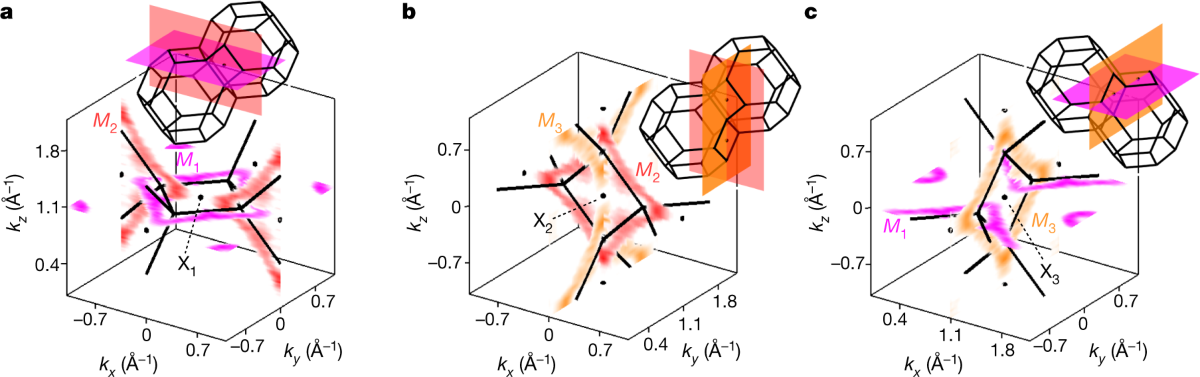
Kagome metals and magnetic topological materials have been a recurring theme in my work because they offer a rare combination of rich band structure, tunable symmetry breaking, and experimentally accessible surface states. I have worked on Weyl physics, linked-loop states, charge-order effects, and topological responses in these systems, often using ARPES as the central probe.
Spectroscopic probes of electronic structure
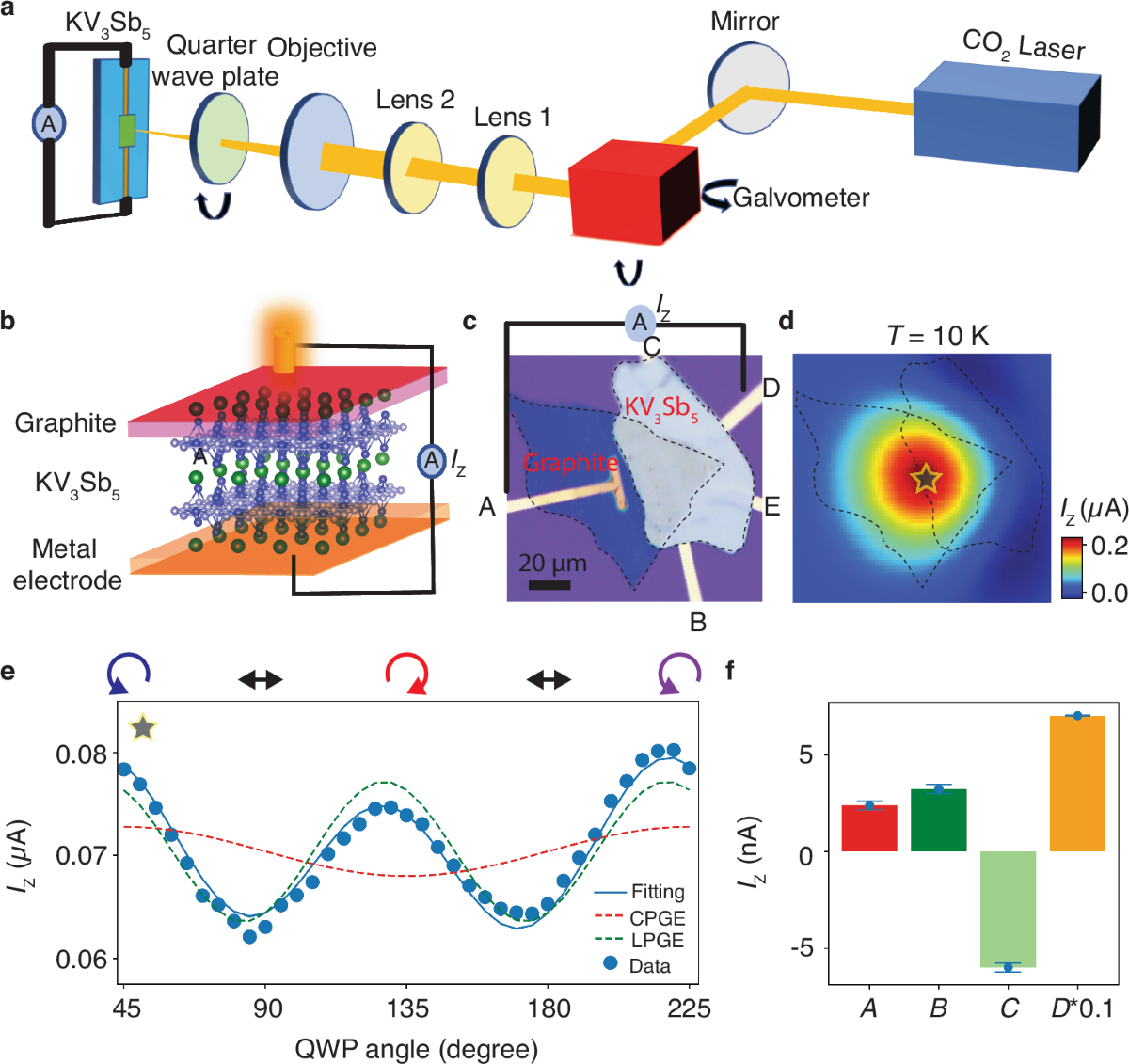
Much of my work uses angle-resolved photoemission spectroscopy together with complementary methods including scanning tunneling microscopy and nonlinear optical measurements. These techniques make it possible to distinguish bulk bands from surface states, follow temperature-dependent or interaction-driven changes, and connect experimental spectra to concrete microscopic models.
Correlated and interaction-driven quantum matter
I am especially interested in cases where topology is not just inherited from a simple band calculation but is reshaped by interactions. That includes Kondo-lattice materials, charge-ordered kagome systems, and excitonic or symmetry-breaking phases in which topology and correlations have to be understood together rather than separately.
Research Snapshots
Representative Directions
Hybrid and higher-order topology
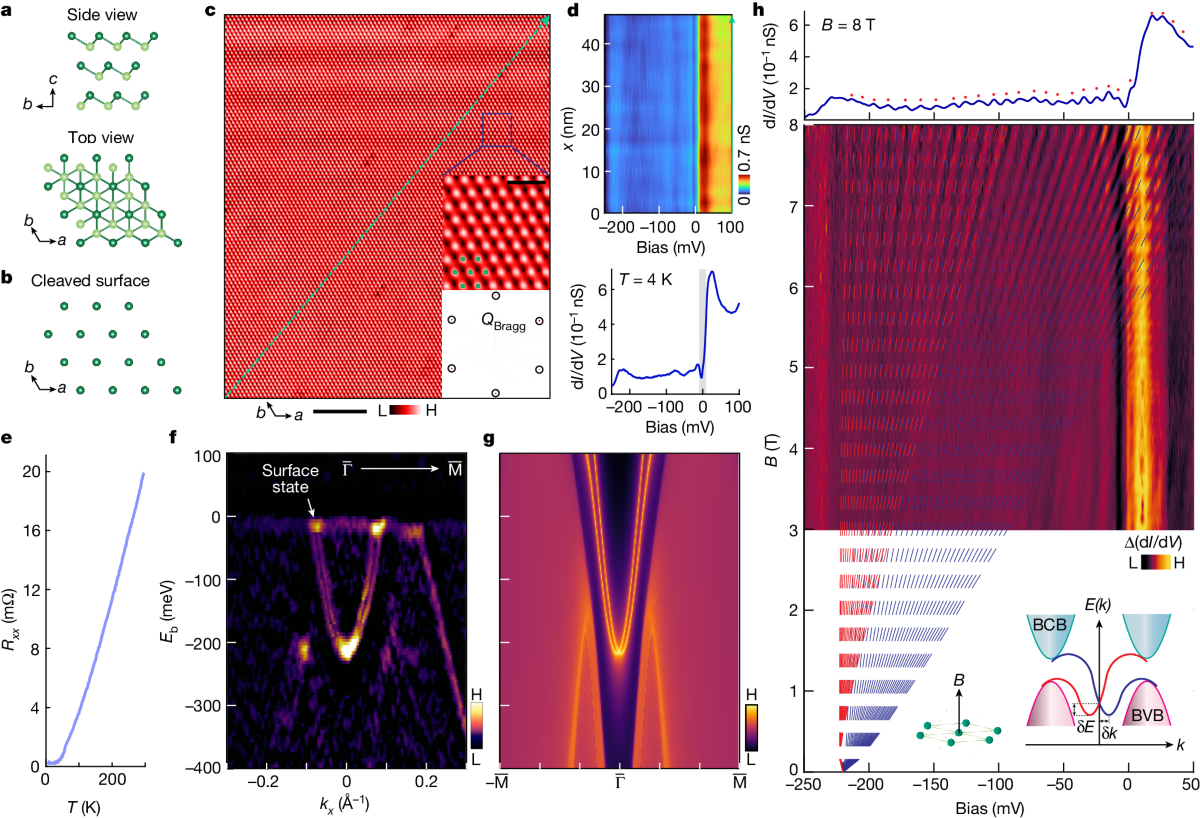
In our work on elemental arsenic, we found evidence for a hybrid topological phase in which strong and higher-order topology coexist. What made that project exciting was that the relevant signatures appeared across multiple length scales, connecting momentum-space surface states to real-space edge conduction channels.
Charge order and surface-bulk disentangling
In ScV6Sn6, one of the main challenges was to disentangle true bulk reconstruction from a large number of surface effects. That project reflects a kind of problem I enjoy: the data are complicated, the material is interesting, and the main task is to decide which part of the story is intrinsic.
Correlated topology in Kondo systems
I have also worked on topological Kondo-lattice physics, where heavy-fermion behavior and magnetism reshape the relevant low-energy bands. These systems are especially interesting because the topology is tied to many-body coherence rather than only to weakly interacting bands.
Current Interests
- Topological states in kagome metals and magnetic materials
- Interplay of symmetry, interactions, and topology
- ARPES-based reconstruction of complex band structure
- Bulk-surface-edge correspondence in real materials
- Quantitative analysis workflows for large experimental datasets
Selected Papers
- Broken symmetries associated with a Kagome chiral charge order, Nature Communications 16, 3782 (2025)
- Topological excitonic insulator with tunable momentum order, Nature Physics 21, 1250–1259 (2025)
- Superconductivity and a van Hove singularity confined to the surface of a topological semimetal, Nature Communications 16, 3998 (2025)
- A hybrid topological quantum state in an elemental solid, Nature 628, 527–533 (2024)
- Untangling charge-order dependent bulk states from surface effects in a topological kagome metal ScV6Sn6, Physical Review B 109, 075150 (2024)
- Visualization of Tunable Weyl Line in A–A Stacking Kagome Magnets, Advanced Materials 35, 2205927 (2023)
- Signatures of Weyl Fermion Annihilation in a Correlated Kagome Magnet, Physical Review Letters 127, 256403 (2021)
- Observation of a linked-loop quantum state in a topological magnet, Nature 604, 647–652 (2022)