
Topological Quantum Materials • ARPES • Correlated Electron Systems
Hi, I’m Zijia.
I recently completed my PhD in Physics at Princeton University, where I worked in the Hasan Research Group on topological quantum materials. My work has focused on how topology, symmetry, and electronic correlations show up in real materials, especially through angle-resolved photoemission spectroscopy, scanning probes, and theory-guided analysis.
Over the past several years, I have worked on kagome metals, magnetic topological systems, charge-ordered materials, Kondo-lattice physics, and interaction-driven topological phases. I enjoy projects where a messy experimental picture can be turned into a clean physical story.
Background
I received my PhD in Physics from Princeton University on March 29, 2025, after previously earning a BS in Physics from Tsinghua University. During graduate school I worked on experimental condensed matter physics, with an emphasis on electronic structure in topological and strongly correlated materials. My training has been shaped by a mix of spectroscopy, materials-driven questions, and close interaction with theory.
Alongside academic research, I have a longstanding interest in quantitative modeling, machine learning, and statistical inference. What carries across both physics and quantitative work is the same habit of mind: start with noisy data, identify the right structure, and build a model that is both useful and explainable.
Research Areas
Topological Quantum Materials
I study how band topology manifests in real materials, from Weyl and nodal-line systems to higher-order and hybrid topological phases.
Spectroscopy and Microscopy
My work uses ARPES together with complementary probes to disentangle bulk bands, surface states, and interaction-driven reconstructions.
Quantitative Modeling
I care a lot about careful data analysis, signal extraction, and building workflows that turn difficult measurements into reliable conclusions.
Selected Work
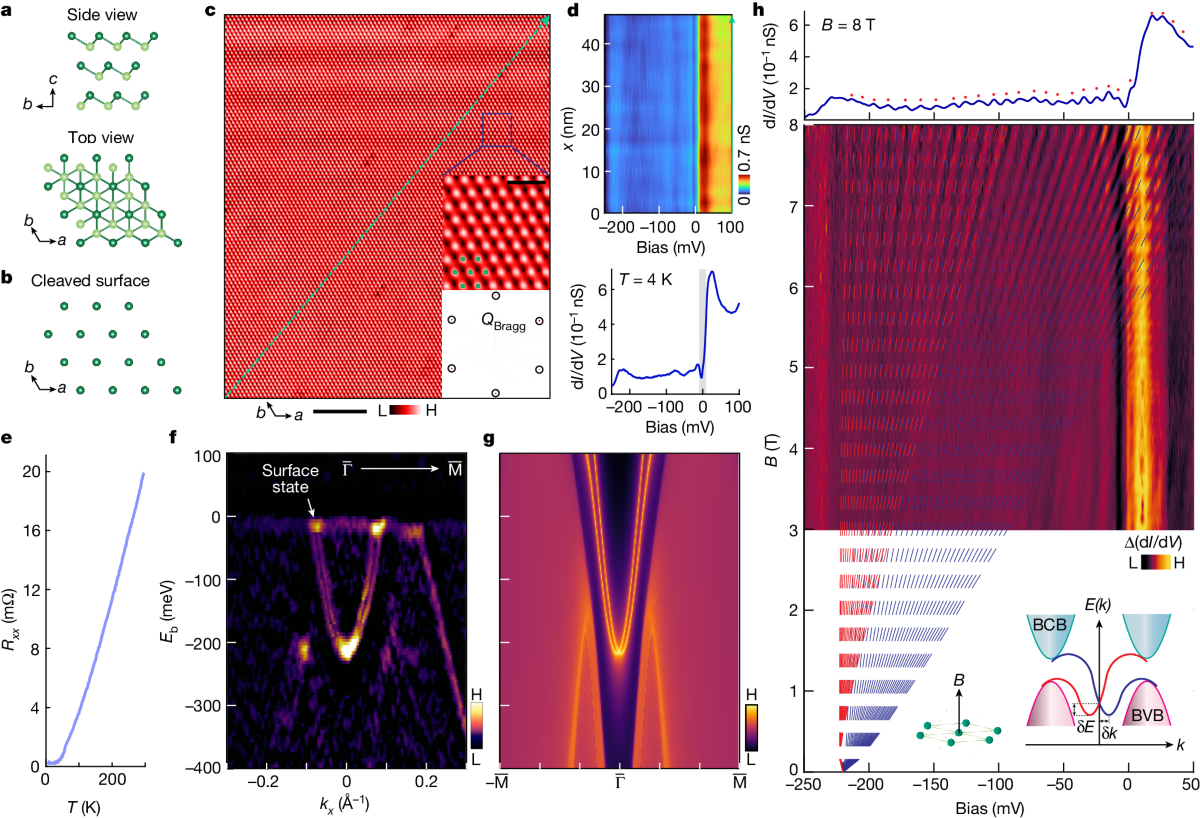
Hybrid topology in elemental arsenic
Our 2024 Nature paper showed that elemental arsenic hosts a hybrid topological phase combining strong and higher-order topology in one material platform.
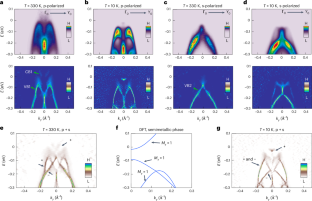
Topological excitonic insulator
This 2025 Nature Physics paper resolved interband hybridization and symmetry breaking in Ta2Pd3Te5, establishing a topological excitonic insulator with tunable momentum order.
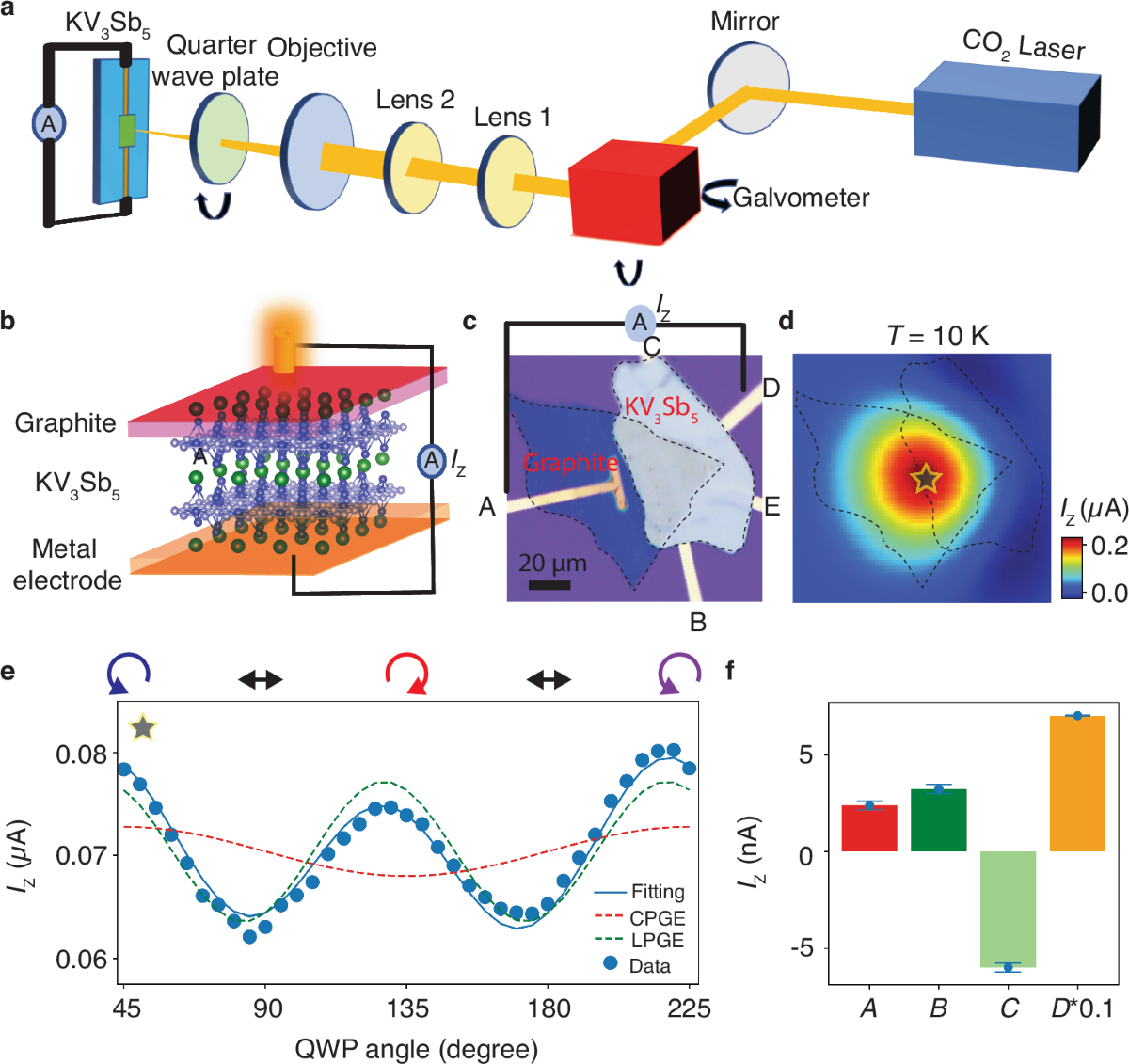
Kagome chiral charge order
Our 2025 Nature Communications paper used nonlinear photocurrent microscopy to identify the broken symmetries of the chiral charge-ordered state in KV3Sb5.
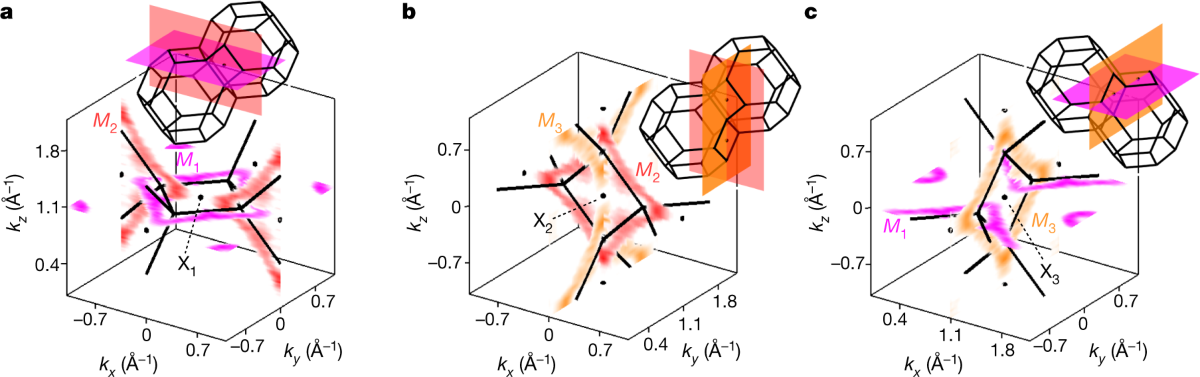
Linked-loop topology in magnets
This co-first-author Nature paper directly visualized a linked-loop quantum state and its associated surface boundary signatures.
Charge order in ScV6Sn6
This work clarified how charge order reshapes the bulk electronic structure of ScV6Sn6 while separating it from surface-driven effects.
Recent Highlights
- 2025 — Princeton awarded my PhD in Physics on March 29, 2025.
- 2025 — Published Broken symmetries associated with a Kagome chiral charge order in Nature Communications.
- 2024 — Published A hybrid topological quantum state in an elemental solid in Nature.
- 2024 — Published work on ScV6Sn6 in Physical Review B.
- 2023–2024 — Continued work on kagome systems, correlated topology, and Kondo-lattice materials.